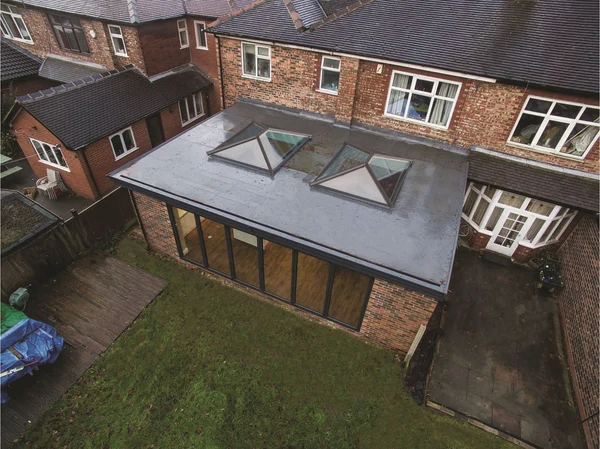
Roof lanterns are a popular architectural feature in extensions, kitchen-diners and open-plan living areas. They introduce daylight from above while creating a visible focal point in the roof. Aluminium roof lanterns combine glazed panels with a metal framework, offering a defined architectural appearance and a choice of finishes to suit different properties.
Their suitability depends on more than appearance. Frame design, glazing performance, structural support, weatherproofing and thermal insulation all affect how well a roof lantern performs after installation.
Property owners planning an extension or roof renovation should understand these factors before choosing a product.
What Is an Aluminium Roof Lantern?
An aluminium roof lantern is a raised glazed structure fitted into a flat or low-pitched roof. It typically consists of sloping glass panels supported by an aluminium frame, with a central ridge and supporting bars forming the overall structure.
The raised design allows daylight to enter from several directions. This can help illuminate the area beneath the lantern and create a greater sense of height in a room.
Aluminium is used for the framework because it is relatively lightweight for its strength, can be formed into slim profiles and is suitable for durable external finishes.
Roof lanterns are often installed above kitchen extensions, dining areas, living rooms and other spaces where daylight and architectural character are priorities.
Why Aluminium Is Used for Roof Lanterns
Aluminium provides a strong, lightweight, and durable frame that supports glazed panels while offering slim profiles and a range of finishes.
Strength and structural performance
Aluminium offers a favourable strength-to-weight ratio, allowing manufacturers to create frames that support glazing without relying on excessively bulky sections.
The actual performance depends on the frame design, alloy, dimensions, connections and glazing specification. Large lanterns may require additional supports or specific structural calculations.
Property owners should confirm that the chosen system is designed for the proposed span, site exposure and applicable loading requirements. A product’s suitability cannot be established by material alone.
Slim frame profiles
One of aluminium’s main architectural advantages is its ability to support relatively narrow frame sections. Slim profiles can leave a larger proportion of the roof lantern available for glazing.
This creates a defined appearance without allowing the framework to dominate the roof. It can suit contemporary extensions as well as renovations that need a clear contrast between the existing building and new construction.
The visible frame width varies between manufacturers, so product drawings should be reviewed before a final decision is made.
Durable external finishes
Aluminium roof lantern frames are commonly supplied with powder-coated finishes in a range of colours. These coatings provide the intended appearance and help protect the metal surface from environmental exposure.
The finish’s durability depends on its quality, application and maintenance. Coastal conditions, pollution and harsh cleaning products may affect the rate of deterioration.
Check the manufacturer’s warranty and cleaning guidance, especially for buildings in exposed locations.
How Roof Lanterns Improve Daylight
Roof lanterns allow natural light to enter from multiple directions, helping brighten interior spaces and reduce reliance on artificial lighting during the day.
Light from multiple directions
Unlike a conventional roof window that sits close to the roof surface, a lantern has sloping glazed sides. These allow daylight to enter from different directions as the sun moves during the day.
This can help distribute light across the room, particularly where the lantern is positioned above an open-plan living area.
The actual result depends on the lantern’s size, orientation, surrounding buildings, glazing specification and ceiling height. A large unit will not necessarily illuminate every corner equally.
A greater sense of space
The raised profile creates additional visual height above the ceiling line. In an extension with a flat roof, this can make the central part of the room feel less enclosed.
Daylight entering from above can also make the space feel brighter than one illuminated only by side windows.
The effect is influenced by interior finishes. Pale ceilings and walls generally reflect more light, while dark surfaces absorb a greater proportion of it.
Reducing daytime lighting demand
Roof lanterns may reduce reliance on electric lighting when sufficient daylight is available. This can be useful in rooms used for cooking, dining, working or socialising throughout the day.
The amount of energy saved depends on occupancy, lighting controls and the local climate. Artificial lighting will still be needed during darker hours and periods of poor weather.
Energy performance should therefore be considered alongside the lantern’s other benefits.
Glazing and Thermal Efficiency
The glazing specification has a major influence on a roof lantern’s comfort and energy performance. Different glass combinations offer different levels of insulation, solar control, light transmission and acoustic performance.
Double glazing is commonly used, while some systems may offer triple glazing or other enhanced specifications. Buyers should compare the complete unit rather than looking at the glass alone.
The whole-unit U-value indicates how readily heat passes through the lantern. A lower value generally indicates better thermal insulation. Frame design, seals and installation details also affect the finished result.
Solar heat gain is another consideration. Glazing that admits substantial sunlight may help warm a room during colder weather but can contribute to overheating in summer.
The right balance depends on the property’s orientation, room size, local climate and how frequently the space is occupied.
Installation Considerations
Proper structural support, accurate kerb preparation, effective waterproofing, and suitable insulation help ensure the roof lantern remains secure and weather-resistant.
Confirm the roof structure can support the lantern
Roof lanterns place loads on the surrounding roof structure. The opening must be designed to support the frame, glazing and relevant environmental loads.
Before installation, the roof joists and supporting members should be checked. Additional structural work may be needed, particularly when replacing an existing roof covering or creating a new opening in an extension.
The manufacturer’s installation drawings should be used to establish the required opening dimensions and support arrangements.
Prepare the correct kerb or upstand
Many roof lantern systems are installed on a raised kerb that provides a secure mounting surface above the roof covering. Its dimensions must match the selected system.
The kerb also needs to accommodate insulation and waterproofing details. Incorrect preparation can affect the fit of the lantern and create weak points around the roof opening.
Protect against water ingress
A roof lantern creates several joints between the glazing system and the surrounding roof. These connections must be weatherproof and compatible with the existing roofing materials.
The installer should pay attention to flashing, seals, membrane connections and water drainage. Poor detailing can lead to leaks that damage internal plasterwork, insulation and structural components.
The roof should be checked for effective drainage so that water does not accumulate around the lantern.
Maintain airtightness and insulation
The perimeter connection between the roof lantern and the roof structure should be insulated and sealed correctly. Gaps can cause draughts, heat loss and condensation.
Thermal performance depends on the entire installation, not simply the manufacturer’s glazing figures. Proper detailing helps the completed roof assembly achieve the intended performance.
Preventing Glare and Overheating
Large glazed roof areas can admit significant sunlight. In a south-facing extension, direct solar gain may cause discomfort during warmer months, especially if the room has limited ventilation or shading.
Suitable glazing can help manage solar heat gain. Internal blinds, external shading and an appropriate ventilation strategy may also be useful, depending on the design.
The lantern’s position should be considered alongside furniture and screen locations. Direct sunlight on televisions, computer displays and work surfaces can create glare.
An opening roof lantern should only be specified if the product is designed for ventilation. Fixed systems provide daylight but do not offer an opening for fresh air.
Cleaning and Ongoing Maintenance
Aluminium frames generally require relatively little maintenance, but periodic cleaning and inspection are still necessary. Dirt, leaves and other debris should be removed from areas where they could affect drainage or seals.
Use cleaning products recommended by the manufacturer to avoid damaging the frame finish or glazing. Abrasive tools may scratch glass or affect protective coatings.
Inspect the seals, frame connections and surrounding roof covering for deterioration. Any loose components, cracks or signs of water ingress should be assessed promptly.
The safe method of cleaning depends on the lantern’s height, roof access and glazing design. Property owners should not walk or stand on the glazing unless the manufacturer explicitly confirms that the system is designed for that purpose.
Choosing the Right Style and Size
Aluminium roof lanterns are available in different dimensions, frame colours and configurations. The most suitable design should complement the extension’s proportions and the existing property.
A small lantern may provide a focal point above a dining area, while a larger structure may be appropriate for an open-plan kitchen and living space. The supporting roof structure and the desired amount of daylight will help determine the practical size.
Consider the view from inside and outside the property. Frame colour, ridge design and glazing proportions influence how the lantern relates to the roofline and interior decoration.
Warranty coverage, replacement component availability and the installer’s experience should also form part of the selection process.
Making the Investment Work Long Term
Aluminium roof lanterns combine overhead daylight with a distinctive glazed structure. Their slim profiles, durable frame options and architectural flexibility make them suitable for many residential extensions and selected commercial projects.
However, a successful installation requires more than choosing an attractive frame. Structural support, thermal performance, solar control, weatherproofing and safe maintenance access all need to be addressed.
Compare complete-system specifications and obtain advice from a suitably qualified installer before finalising the design. A correctly selected and installed aluminium roof lantern can provide useful daylight and a lasting architectural feature while supporting comfortable indoor conditions.